
Revised & Updated for 2026
Introduction
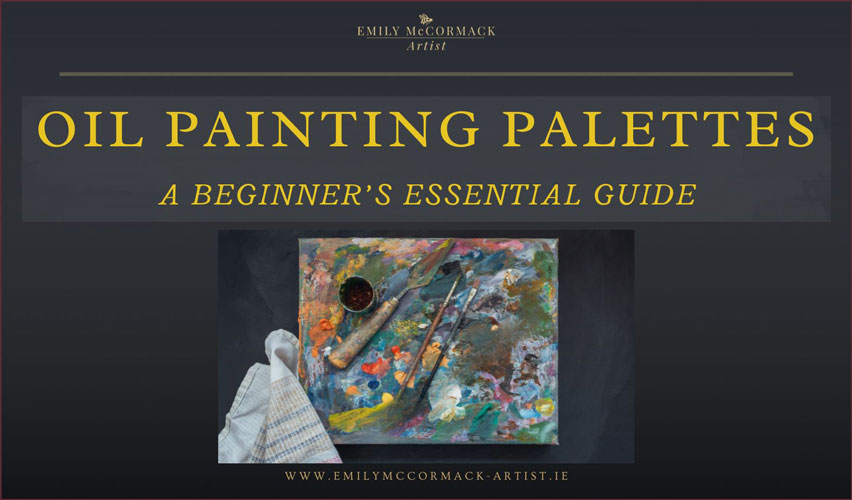
Oil painting palettes are one of the simplest tools in a painter’s kit, yet they play a central role in how efficiently and comfortably you work as an artist.
The right palette supports clean colour mixing, accurate value judgement, and smooth workflow. This guide outlines the main types of palettes available today, the materials they are made from, and how to choose the most suitable option for your studio or home setup.
A quick note before we begin: this blog was originally planned for earlier in the year, but we paused publication while refining the design illustrations. New Wave Art have kindly granted permission for us to use their images for the timber, glass, and tear‑off palettes featured here.
Historically
Oil painting palettes were first depicted in the hands of Women Painters, in or around 1400.
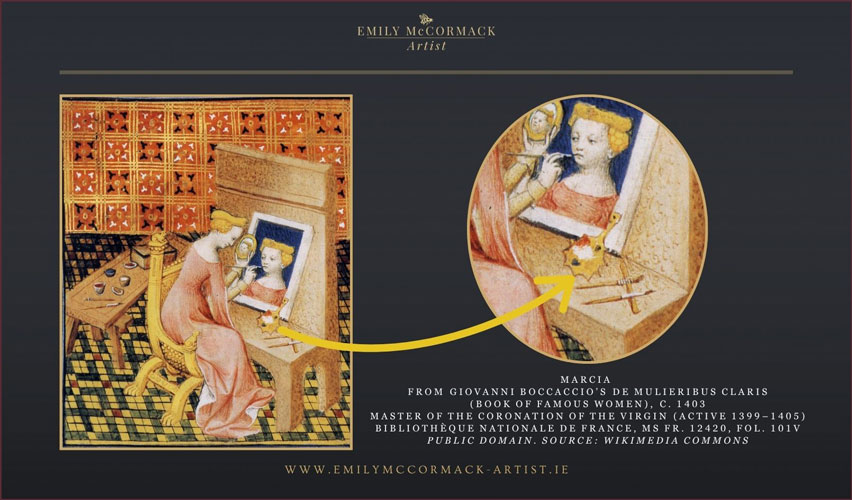
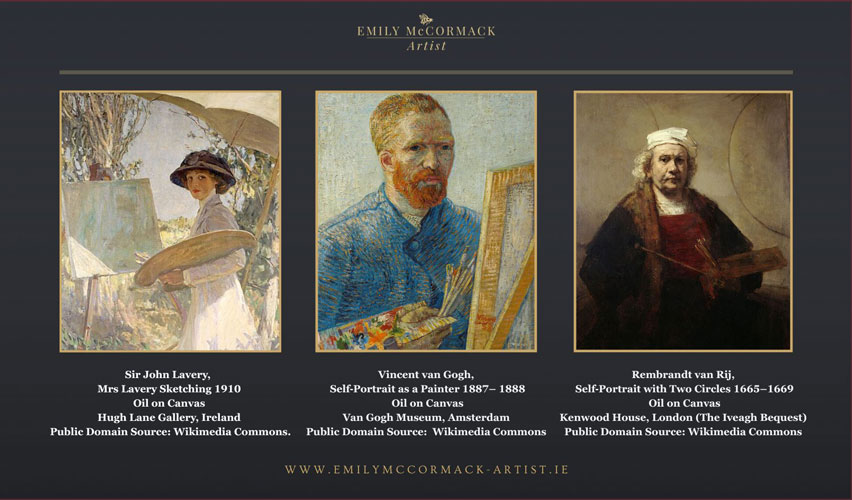
Traditionally, palettes were made from hardwoods such as walnut, pear, and maple. Their size varied from very small hand‑held boards as shown above to large oval or rectangular palettes used from the Renaissance onward as shown below.
Materials You Can Use For Your Palette
Today, there is a wide range of oil painting palettes available on the market and indeed ones you can make yourself at home. The most common are made from timber, glass, acrylic, paper and cardboard as follows:
Timber
You can make a large table-top palette with a sheet of MDF or plywood and give it a few coats of varnish and oil; there are plenty of top tips online on how best to prepare these. The mid-tone colour of the MDF is particularly great for mixing your paints on.
If you prefer not to make your own, you can purchase a New Wave POSH® Wood Palette in either wood stain or neutral grey. They come in various sizes and offer a durable, non‑porous surface that’s easy to clean.
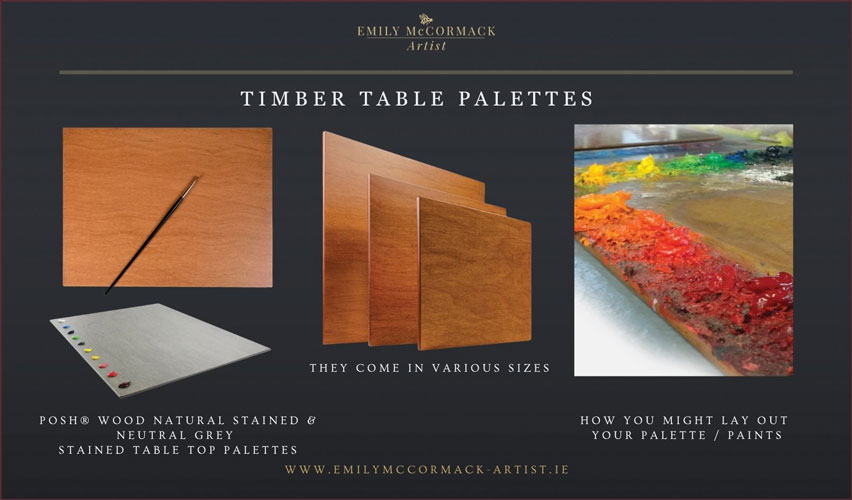
Alternatively, you can use a hand‑held timber palette, which comes in a range of sizes, materials, and shapes such as kidney, round, and rectangular.
Most manufacturers also offer both left‑handed and right‑handed versions.
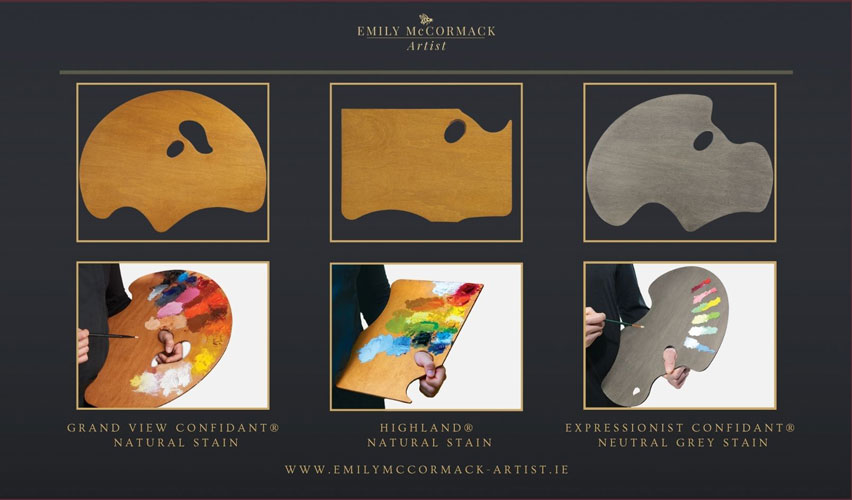
However, neutral‑grey timber palettes are far less common, and at present New Wave Art appear to be the only company producing this option. The idea behind a neutral‑grey palette is that it gives a mid‑tone background that doesn’t warm or cool the colours sitting on it.
Some painters find this particularly helpful when assessing values or mixing muted colours, though many are equally comfortable working on timber or white. It’s worth trying different surfaces to see which one feels most natural in your own practice; I was trained on white and timber, so I find it takes a little bit of time to get used to working on the neutral-grey.
Timber palettes generally need to be sealed so the paint doesn’t sink into the wood, and over time they develop a lovely patina that makes them smoother and easier to work on.
Other brands include Cappelletto, Jakar, Mabef and Zecchi.
You can pay as little as €10 to over €100. Regardless of price, the main thing is to find a palette you love using, as it’s a vital part of your painting kit and key to developing your colour-mixing skills.
Glass / Acrylic
With glass palettes, you will need a table to place them on. It’s a good idea to put a mid‑value toned sheet underneath, as this helps you see paint colours more accurately when mixing and makes value judgement easier.
One artist I’ve had the pleasure of knowing over the last few years shared a great tip: she uses a glass shelf from her fridge. Hers was very robust, so if you try this, make sure it is tempered or toughened glass and safe to use.
You can also purchase glass palettes from New Wave Art which are known as POSH® Glass Palettes. They come in grey, white and clear; along with various sizes.
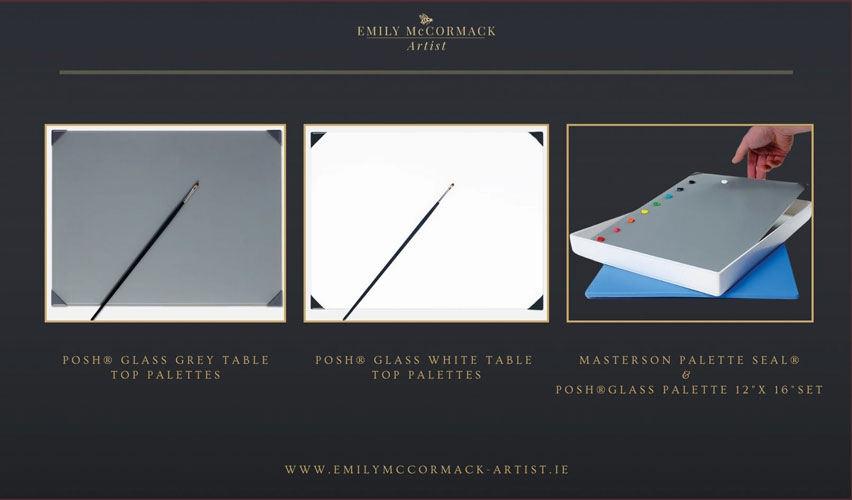
New Wave Art recommends removing dried oil paint with artist solvents or with a single‑edge razor blade in a retractable scraper, or a plastic razor used alongside solvent to avoid scratching the surface. If you choose to use a razor, remember to handle it with extreme care.
New Wave Art also offer a Masterson Palette Seal that can be used with the POSH® Glass or the POSH® Paper Palette. While it was originally designed for acrylics, many oil painters use it as an airtight storage box. It won’t keep oil paint wet, but it will slow drying, protect your palette overnight, and make transporting it much easier.
They also make an acrylic palette and a separate peelable palette. The peelable version is designed for acrylics, where the paint dries into a flexible layer that can be lifted off the surface. The standard acrylic palette doesn’t offer that peelable finish, but it can still be used for oils, which are easily removed with solvent.
Paper
I have used most of the palette types above, but I still revert back to the Tear‑Off Disposable Paper Palette (usually 12 × 16″ with around 40 sheets). They’re convenient because there’s no cleaning involved; you simply tear off the sheet when you’re finished.
For those who prefer a more eco‑friendly option, these palettes are not ideal, as they create waste. In that case, glass or timber may be a more sustainable choice.
The reason I use these palettes is that I’m often called from the studio for days at a time, and when I eventually get back the paint has dried and I get frustrated and end up throwing out the timber palette, so that is why I use the disposable paper ones.
Price‑wise, you might find tear‑off paper palettes for around €9.50, though they can cost €16 and upwards. Brands available include New Wave Art, Elements, Daler Rowney, Winsor & Newton, Jackson’s Art, and Hahnemühle.
When you consider that you can make or purchase a glass or timber palette that lasts forever, these costs can add up. Other downsides to the tear‑off palette are that they are generally white, which can affect your values when colour mixing; if you’re using a daylight bulb above your easel, the white surface can also create glare and the larger 12 × 16″ size is often difficult to find, so you may have to settle for the 9 x 12″ pads, which are quite small to work on.
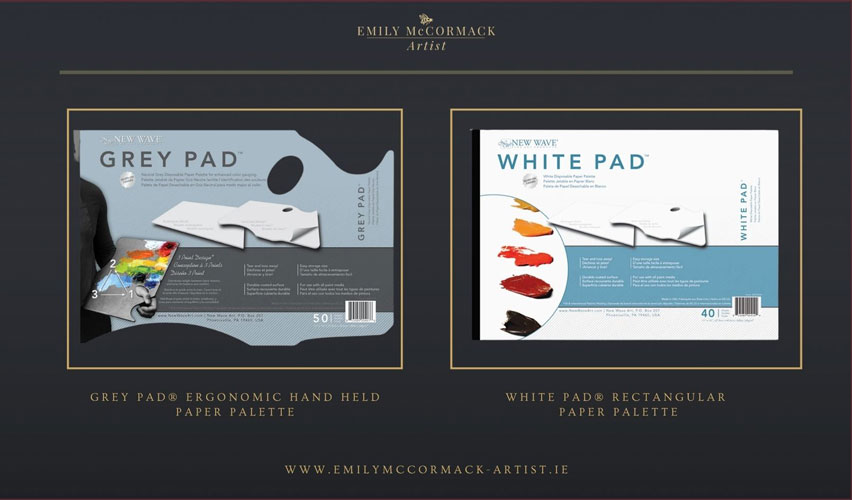
New Wave Art have addressed these downsides by producing a grey‑toned disposable option. Prices vary depending on the retailer. I found their ergonomic handheld version helpful, particularly as I have a short wrist‑to‑elbow reach, and the contouring supported this. However, I did find it a little heavier to hold for long periods compared with lighter disposable brands such as Sinoart. This won’t be an issue for everyone, but it’s worth noting if you prefer a very lightweight palette.
Cardboard
Depending on what I’m painting, you’ll often find me in the studio using a large cardboard palette I’ve made myself. I love them. They’re lightweight, strong, and have the added benefit of absorbing a little of the oil from the paint. This leaves me with a slightly thicker, more workable blob of colour, and saves me from having to stop mid‑flow to add extra calcites or waxes.
Choosing Your Palette – The Golden Rules
The Golden Rules as I see them when choosing a palette are:
- The surface should be as wide and flat as possible to give you room to mix your colours.
- It should be easy to clean or dispose of.
- If you plan to hold it, it needs to be lightweight and sit comfortably over the forearm with a secure thumb grip.
- Avoid plastic palettes with wells, these are designed for acrylic or watercolour, not oil paint.
As a beginner, it helps to understand that a palette isn’t just a board to hold paint; it’s a working surface with a few simple physical requirements. Oil paint behaves best on a smooth, non‑absorbent surface that’s large enough to prevent colours from crowding together. A palette that’s too small, too textured, or too absorbent will make the paint drag, dry unevenly, or become difficult to control. Weight and ergonomics also matter: a hand‑held palette should rest comfortably on the forearm without straining the wrist, and a table palette should stay stable under pressure from the brush. These basics should help to determine whether a palette supports your painting or quietly works against you.
Conclusion
In conclusion, the world is your oyster when it comes to palettes. You can purchase one for as little as €10 or treat yourself and spend over €100, or you can make your own from timber, glass, or cardboard. Whatever you choose, make sure it suits you exactly; whether you’re holding it or twisting around to scoop up paint from a table palette.
A good palette should work with your body, not against it, and ideally you shouldn’t notice it at all while you’re listening to great tunes and painting your heart out.
Your Next Steps in Oil Painting
If you’d like to learn how to use your palette and lay it out correctly, I teach all of this in the studio. These skills are much easier to learn in person, where you can see the movements clearly and get immediate feedback.
You can explore:
- The Saturday Beginner’s Oil Painting Workshop (ideal for beginners)
- Our studio-based art classes and/or 1-2-1 workshops
- My free downloadable Materials List for beginners (if you want to build your kit gradually)
- Other free beginner‑friendly blog guides available on the site including 5 ways to layout your palette.
Painting is a physical skill, and the way you hold a handheld palette or use a tabletop palette makes a huge difference. If you’d like to develop good habits from the start, and learn in a calm, supportive environment, you’re very welcome to join a session in the studio.
A full Oil Painting Manual is currently in development, it’s a project that I’m taking my time with, so it becomes a genuinely useful resource. If you’d like to be notified when it’s released and to receive new guides and occasional studio updates, you’re very welcome to join our studio mailing list.

Emily McCormack
* As always, I am not affiliated with any brands, stores, or persons I may or may not mention and your use of any of these products, links and the like are your own risk and it’s up to you to do your research/homework before you use them. This is just my opinion and experience.
Become an insider, subscribe to receive our studio newsletter
Our monthly newsletter gives early access to new artwork, studio notes, and first booking for workshops.